
I guess the most common question I receive as a yoga teacher is: what is the meaning of yoga?
To sum up and define yoga in a few words is quite difficult for me, mostly because yoga and all its benefits are not meant to be written nor memorized, but to be constantly practiced and experienced. During my first years as a yoga practitioner, I attended a David Williams workshop; a very experienced yoga teacher who I felt truly embraced yoga as a way of life. During one of his lectures, he mentioned a phrase that marked my path as a yoga student, “Before you’ve practiced, the theory is useless. After you’ve practiced the theory is obvious”.

So, ever since that moment, I always try to remind myself of two things: What does yoga mean to me? Why do I practice yoga? What amazes me the most is the answers to these questions have challenged me over the years. Yoga has been a way to cope with stress and anxiety, a way to open my heart to grace, love and compassion, and an opportunity to connect with the inner silence and peace inside. It has been a challenge, in a physical, mental and emotional level. An opportunity to stretch and bend in different ways, to sweat, release toxins, be present and realize life is happening now. A practice of surrendering, dropping my expectations, judgments, and be at peace. Mostly, yoga has been a path to connect what’s really important for me and what makes me happy and content.
The Father of Yoga
In a brief definition, Patanjali, known as “the father of yoga”, said in a very simple way what he thought yoga is for him; “Yoga is the practice of quieting the mind”. But to give meaning to those simple words, practice and discipline are required. Other ways to define it could be by saying that yoga means “union” or “to integrate” which means to unite mind, body and spirit. Many descriptions long and short can be found among books, websites and schools. Theorizing and describing yoga, would be just the same as defining love. Many dictionaries and books can explain the term, but in order to truly understand, and more importantly, to find your own definition you have to practice and live both of them.
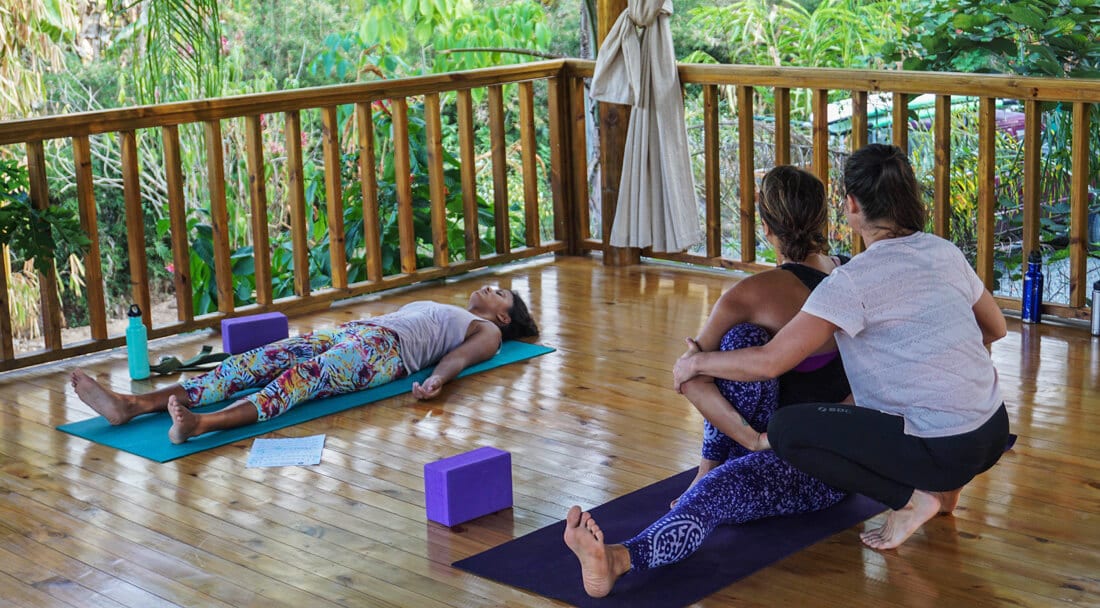
Finding your own answers
I highly recommend to my yoga students — and I keep reminding myself — to not worry so much about the specific definition of yoga, but more importantly, to be aware of your own personal answers to three questions:
- What does yoga mean to you?
- What is the intention of your yoga practice?
- What does yoga represent in your life?
Namaste!

Your Journey Starts Here
Ready to Finally Experience That Life-Changing Surf + Yoga Trip (Without the Overwhelm)?
Bust the 5 biggest myths about going to a surf and yoga camp so you can stop procrastinating and start catching waves - with our FREE 5-day email course.
Get a Toolkit to Create Calm in Your Inbox
Watch the first lesson from our full immersive course: 8 Limbs of Ashtanga Yoga, FREE!




The Benefits of Pranayama Breathing
Words by Pilar
“When you own your breath, nobody can steal your peace.” ~Author Unknown In the great ocean of knowledge inside the science of yoga, there…
A Yogic Diet
Words by Pilar
It is quite common that once we immerse ourselves in to the world of yoga we begin to wonder about the correct diet to…

What is the Meaning of Anjali Mudra?
Words by Pilar
Have you ever wondered about the meaning behind the famous “prayer hands” gesture in yoga? Well, that’s the Anjali Mudra, a sacred hand position…